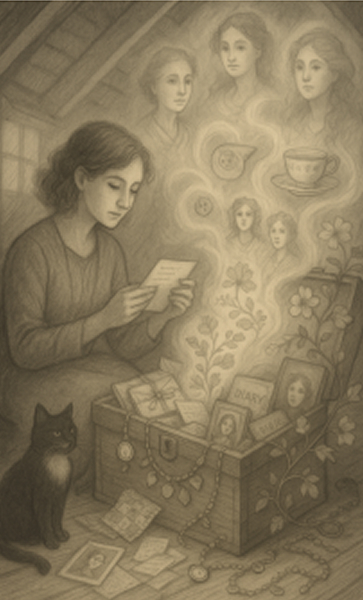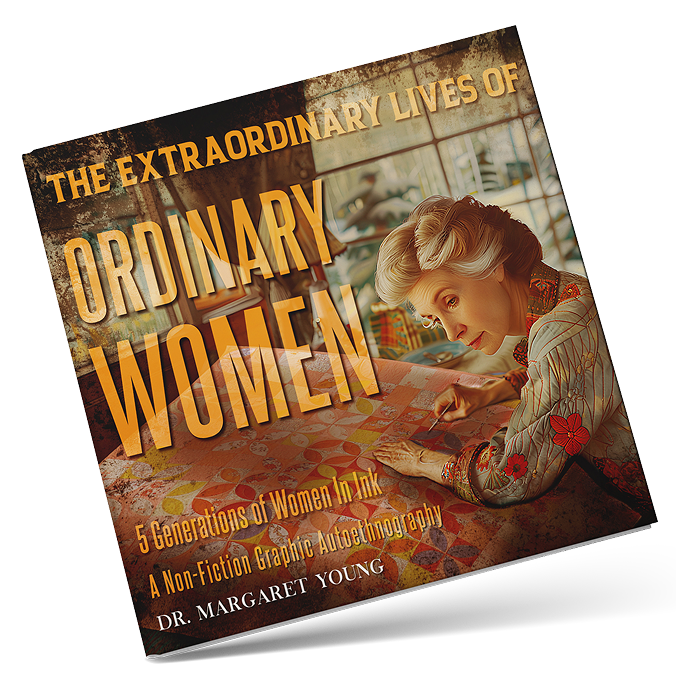

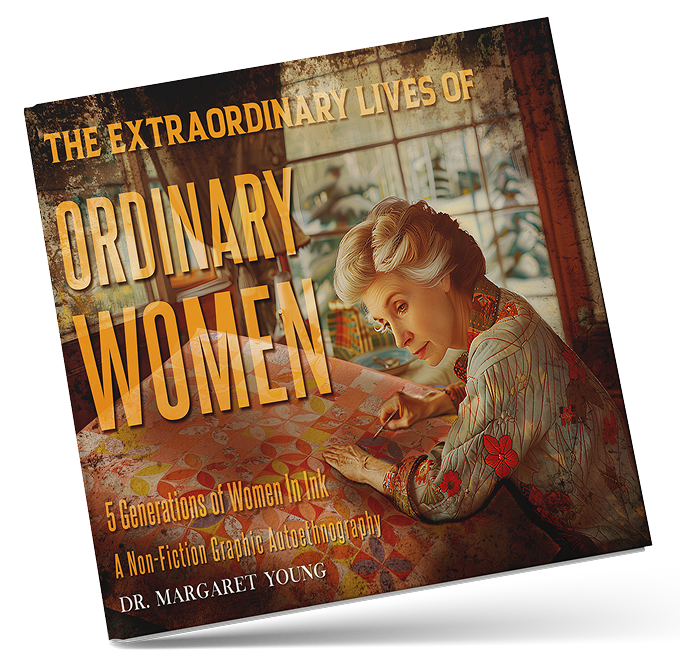
The Extraordinary Lives of Ordinary Women: Five Generations in Ink is what happens when family history meets a time machine, a magnifying glass, and a very sharp pen. Part memoir, part detective story, and part love letter to the women who came before us, this graphic auto-ethnography dives head first into drawers full of letters, diaries, talismans, and well-loved objects that have survived wars, migrations, and more than one child with scissors.
Spanning five generations of women—teachers, immigrants, dreamers, farmwives, and one chronic note-maker—Margaret L. Young unpacks what’s been handed down through mitochondrial DNA, family recipes, wartime whispers, and broken brooches. These aren’t queens or celebrities; they’re the women who kept the world turning while no one was looking—and who left breadcrumbs in the form of quilts, cookbooks, and scribbled notes in margins.
The seven threads that pieced together the The fabric of the Family and this book.

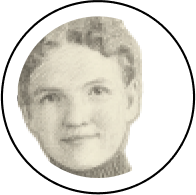
Margaret Jane Parlette Wolary McConnell (b. 1847) —( The matriarch. A frontier survivor with a Recipe/ Caregiving book in her hand and tenacity in her bones. Virtually orphaned at 9 days old, endlessly resourceful, and armed with quilts, prayer, and sharp instincts, she laid the foundation—one handmade stitch and quiet act of resilience at a time
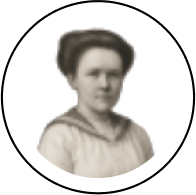
A peripheral part of the story, Alma, was a dedicated horse woman and a hard worker. She found solace in her family, her profession, and her children widowed young. Connected by DNA, but not mtDNA, Sara Laurene South Young, ten years younger

Bertha Margaret McConnell Conley —A herbalist and naturalist/nurse who archived life’s details with the precision of a historian and the heart of a daughter. Bertha kept a scrapbook and a diary—gluing down what mattered before anyone else realized it did. Through wars, moves, and motherhood, she curated a legacy one paper scrap at a time.
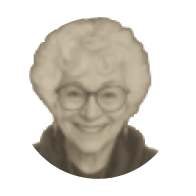
Margaret Young, Ph.D., is a Professor Emeritus of Communication whose career spans broadcasting, journalism, design, and archival deep-dives into 19th-century ephemera. An award-winning writer and lifelong story excavator, she focuses on the resilience of ordinary women and the generational wisdom tucked into diaries, sock drawers, and stubborn streaks. She believes the smallest stories often carry the biggest truths—and maybe a little rebellion
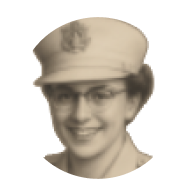
Bright, and fleeting—was her light. Born between the wars, served in the US Army Air Corps. She nursed young man returning home with grievous wounds seen and unseen. She married a young wounded bombardier pilot and was the mother of two small children when she was felled by a mosquito. She left behind diaries letters and loved ones who never recovered.
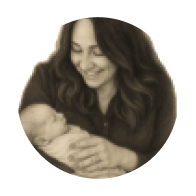
The legacy in motion. Dassie brings warmth, wit, and wisdom to every room she enters. A healer, nurturer, and fierce advocate, she bridges past and present. She mothers sons, cultivates beauty, and carries the family line forward with fire and care. The next leaf. The quiet promise of a new story beginning. Born into a library of women’s lives, Dassie carries both their name and their strength. Her chapter is still unfolding
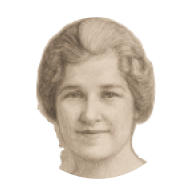
than Bertha was an influencer.She wanted to go into business but her father said No. And No to nursing so she became a teacher, the youngest certified in Warren City. Ill. She had two sons and was a social leader in her community. She played the commodities market and local farmers called her for her political voting advice
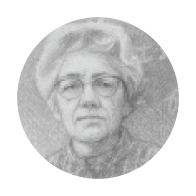
Nellye Rose Conley. A teacher, dedicated aunt, daughter, and grammarian with flair. She knew the value of education, wellironed skirts, and second chances. She filled her home with books, opinion, and emergency cookies passing along a love of learning and a talent for resilience disguised as charm and was always there

The Matriarch Jenny was born on a Monday in 1867—fair of face, just as the old nursery rhyme promised. She came into the world during a time of shifting tides for women, when movements for rights, roles, and reforms were slowly reshaping the social landscape. Though a woman born that year could expect a lifespan of just 40 to 50 years, Jenny surpassed expectations, living to 76. Her life was shaped not only by the limitations of her era, but by the quiet resilience and longevity that marked the women of her generation.

Bertha Margaret was a diary-keeper, button-saver, and collector of quiet revolutions. Born in Montana to pioneer transplants, she grew up in a household steeped in books and careful grammar, which she put to good use as a naturalist, nurse and writer. But beneath her meticulous exterior lived a deeply curious soul who relished family lore, newspaper clippings, and anything typed in Courier. Her scrapbook was both

Alma Rachel spoke the language of care with a teacher’s precision and a mother’s instinct. She was fluent in folded towels, hand-written notes, and the exact timing of when someone needed a snack—or a hug. Her home was a haven of steadiness, where scraped knees, broken hearts, and big dreams were all treated with the same loving attention. Despite tragedy and personal loss, Alma quietly held her family together, nourishing not just bodies, but the emotional seams of the family story.
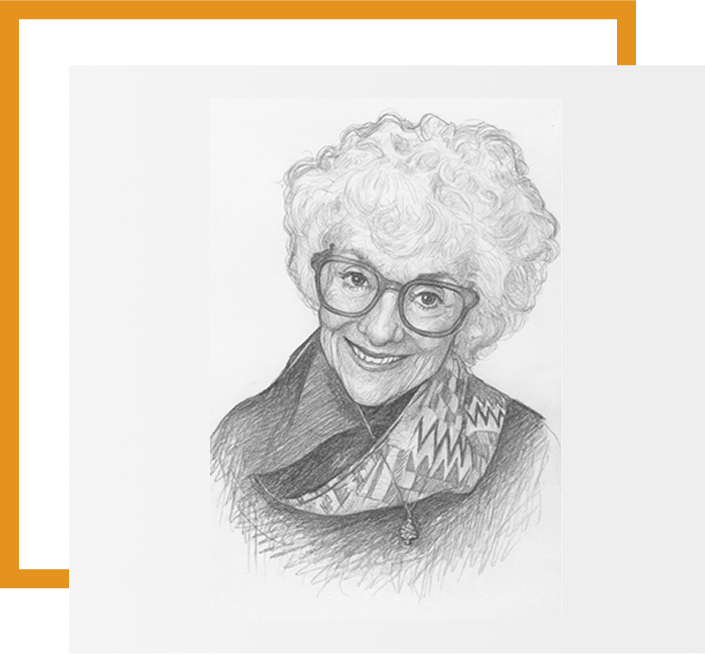
“I consider myself a Collaborator with the women I write about.”
Margaret Young, Ph.D., is a Professor Emeritus in the Department of Communication at Bradley University. With a career stitched together from more than thirty years of radio talent, acting, journalism, advertising, public relations, and the occasional academic brawl over the Oxford comma, she’s as comfortable in front of a crowd as she is buried in 19th-century archives. An award-winning designer and writer, Dr. Young has co-authored three books, published many articles, and filled more journals than a Victorian schoolgirl with a fountain pen. Her trophy shelf includes more than a dozen honors from the Illinois Women’s Press
What is Autoethnography:
What Is Autoethnography? It sounds like the kind of word you’d use to impress a stranger at a faculty wine mixeror get tangled in while trying to explain your book to your aunt at Thanksgiving. But stick with me.
Auto ethnography is actually quite beautiful once you brush off the jargon and shake out the mothballs.
It’s where memory meets meaning-making. Where the ordinary details of a life-say, your grandmother’s wedding dress folded in a cedar chest, or the scent of Aqua Net at a family reunion-aren’t just trivia. They’re texts. They’re data. They’re portals.
When you write autoethnography, you don’t just ask, ‘What happened to me?’ You ask, what happened to me tell us about the world I live in? About gender, history, culture, grief, joy?
Who is Wendy? Wendy is the one you want in your corner when the world tilts sideways. A steady hand, a clear thinker, and a woman with both backbone and a bottomless well of compassion, she brings order to chaos with a grace that looks effortless (though we know it’s anything but).Wendy is not unlike J.M. Barrie. She’s my best friend and my collaborator—precision with a purpose and an ally in a strange world. Together, we’ve sorted through life’s messes—literal and otherwise—hatched more schemes than I can count, and built the kind of shorthand that only comes from years of trust, late-night phone calls, and finishing each other’s sentences.She’s the one who remembers everyone’s birthday without needing a Facebook reminder, shows up with soup and sass when you’re under the weather, and somehow keeps the whole circus of daily life running—with her sense of humor not only intact, but weaponized. Practical, loyal, and quietly fierce, Wendy is the kind of person who shows up—again and again—not for applause, but because it’s simply who she is.Whether she’s nurturing people, projects, or plants, Wendy has a gift for growth. Her wisdom is earned, her wit is sharp, and her love shows up in the details: a handwritten note, a carefully chosen gift, a perfectly timed reality check.In a family full of storytellers and strong women, Wendy is both—equal parts heart and anchor. She is proof that you don’t have to shout to be powerful, and you don’t need a spotlight to leave a legacy.In short, Wendy is the living, breathing definition of an extraordinary life lived by an ordinary woman—a quiet force who reminds the rest of us what grace, grit, and goodness look like.
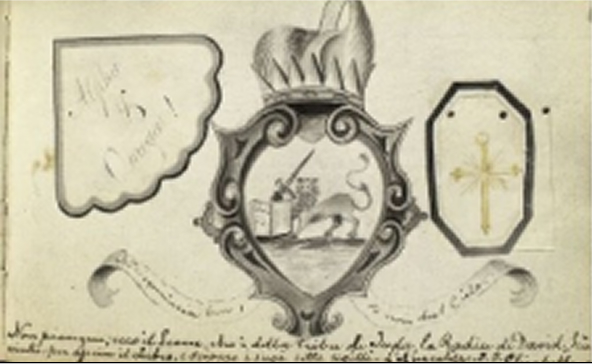
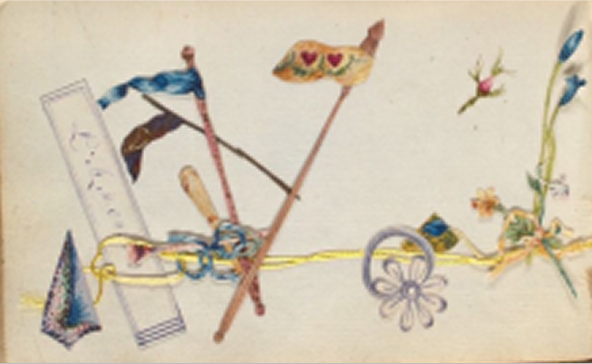
Scrapbooking is many things—a hobby, a time machine, a glorified glue-stick gala. At its heart, it’s a way to preserve the mess and magic of personal and family history, typically stuffed into the likes of a book, a box, or, for the overachievers among us, a card that unfolds like a paper magician’s trick. It often involves photos, scribbled notes, ticket stubs, questionable napkin sketches, pressed daisies, and enough glitter to alarm most vacuum cleaners. Journaling, doodling, and lovingly curated chaos are part of the package. But this isn’t a newfangled craft. Oh no. If you think this all began with Pinterest, let’s hop in our metaphorical DeLorean and head back to the 15th century.
In 15th-century England, clever folks kept commonplace books—essentially intellectual junk drawers where they jotted down recipes, quotes, letters, poems, and other things they didn’t want to forget (or misplace under the bed). Each one was a reflection of its owner’s obsessions and oddities. By the 16th century, friendship albums blossomed onto the scene—think: proto-yearbooks where your friends would inscribe a witty line, a doodle, or perhaps a cheeky Latin phrase, all upon request.
12834 Cheverly Drive
704-575-0917
mlyordinarywomen@gmail.com
©Copyright 2025 MARGARET YOUNG. All Rights Reserved.